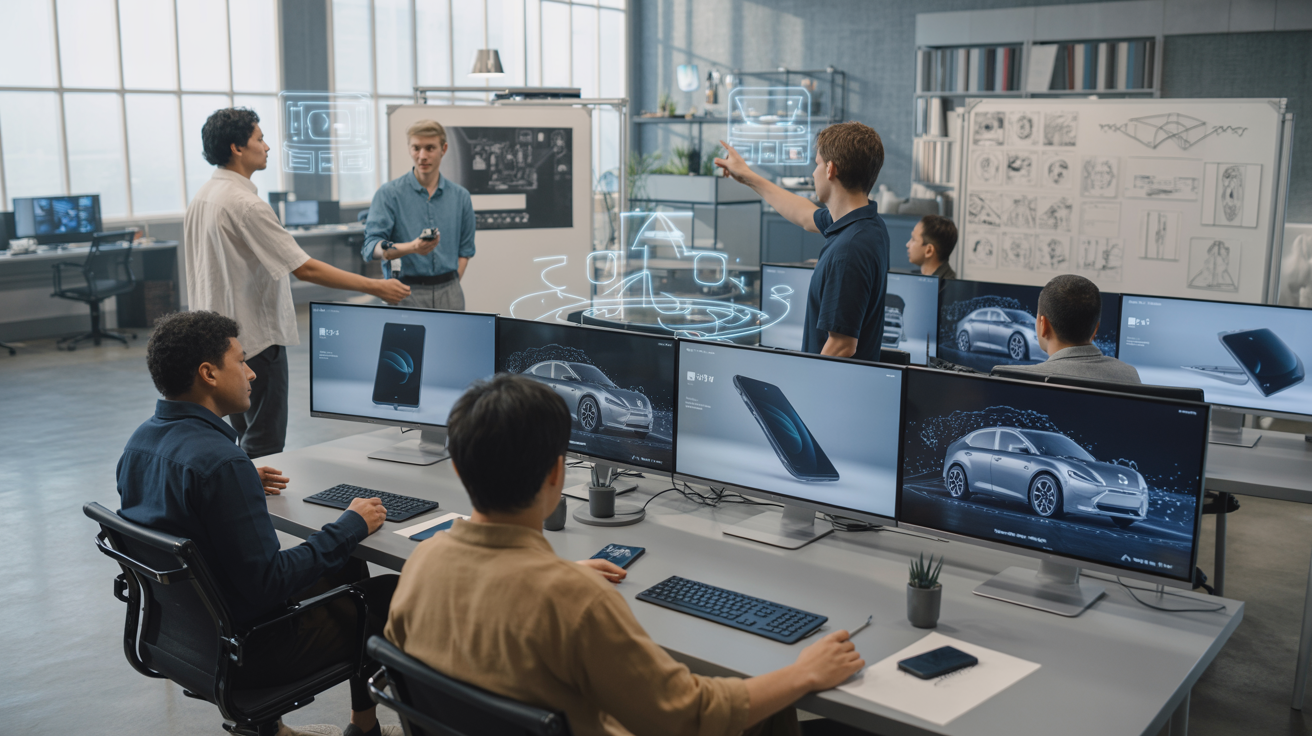
Animation has always been a slow and demanding craft. Every frame takes hours to render. Every movement must be precise. Studios invest weeks, sometimes months, to create just a few minutes of content.
Today, AI is changing that reality. It is giving animators tools that cut time, reduce errors, and expand creative possibilities.
Time is the biggest bottleneck in animation. Studios face tight deadlines. Clients expect high-quality outputs. Traditional workflows rely heavily on manual labor. Modelers sculpt every object. Animators animate every motion. Even with advanced software, the process is labor-intensive.
Integrating AI solves that. AI accelerates rendering. It automates repetitive tasks. It provides real-time previews. This means animators can focus on creativity instead of technical grunt work. A 3d video animation studio can produce more content in less time while maintaining visual fidelity.
Faster production also allows experimentation. Animators can test multiple angles, lighting setups, and motion styles. Without AI, testing multiple iterations would be impractical. With AI, it becomes feasible, efficient, and even enjoyable.
AI excels at repetition. In animation, repetitive tasks include rigging, shading, and object placement. AI algorithms analyze existing frames and predict motion for the next frames. This reduces manual keyframing. Animators can skip routine steps. They get consistent, smooth motion without tedious adjustments.
For example, character rigging often takes hours. AI can automatically generate rigged skeletons based on body structure. It ensures proper joint rotation, realistic bending, and consistent proportions. This saves hours per character. A studio offering 3d product video animation services can scale projects without adding extra staff.
AI also assists with scene composition. It can arrange background elements, optimize camera paths, and maintain continuity across shots. This reduces human error and allows teams to deliver polished scenes faster.
Many fear AI will replace artists. The reality is different. AI augments human creativity. It handles repetitive or technical tasks, freeing animators to focus on design, storytelling, and emotion.
Tools like AI-assisted texture generators or procedural animation software provide multiple options in seconds. Artists can experiment with different materials, colors, and motion patterns without starting from scratch. This speeds decision-making and reduces creative fatigue.
AI also helps in visualization. Real-time simulations show how a scene reacts to lighting, movement, or physics. Animators can adjust details before full rendering. This reduces wasted hours and improves final quality.
Realism is crucial for product demos, commercials, and cinematic projects. AI improves accuracy in motion, lighting, and physics. Motion capture data can be enhanced by AI to create fluid transitions. Light simulations adjust dynamically based on scene properties. AI can even predict natural human gestures for more lifelike animation.
A 3d video animation studio can use AI to achieve realism faster than manual adjustments. The AI-driven workflow ensures that even complex scenes maintain continuity and visual consistency across frames.
Rendering is traditionally the most time-consuming stage. AI reduces render times by predicting frame data, optimizing resource usage, and compressing workloads intelligently. Render farms can process sequences more efficiently with AI scheduling and prioritization.
Post-production benefits too. AI-assisted editing identifies continuity errors, color mismatches, and motion glitches. It can generate final outputs in multiple formats automatically. This speeds delivery to clients and reduces costly revisions.
Adopting AI requires planning. Teams must understand limitations and biases. AI predictions are only as good as the training data. Poor data can produce errors in motion, lighting, or texture. Continuous monitoring is necessary. Human review ensures quality standards remain high.
Training staff is also critical. Animators must learn how to leverage AI efficiently. They need skills to validate AI outputs and make adjustments. Integration works best when AI becomes a collaborative assistant rather than an autonomous operator.
AI will continue to expand capabilities. We can expect more advanced predictive animation, smarter simulations, and AI-assisted storytelling. Tools will become more intuitive, reducing technical barriers and letting animators focus purely on creative choices.
Virtual production environments are emerging. AI can simulate large-scale scenes in real-time, providing live feedback for directors and artists. This will revolutionize workflows in both commercial and cinematic 3D animation.
AI transforms 3D animation production. It speeds workflows, automates repetition, improves realism, and supports creative decisions. Animators gain time to experiment, explore, and refine ideas. Studios achieve faster turnaround and better cost efficiency. The technology is maturing and offers practical benefits now, not just promises for the future.
Studios that adopt AI thoughtfully will produce higher-quality content in less time. They can scale projects, reduce bottlenecks, and maintain human creativity at the center. Integrating AI into 3D animation is no longer optional; it is a strategic advantage for animators and studios aiming to stay ahead.