In today’s world of modern manufacturing, engineers often come across issues concerning custom CNC milling projects, including the improper selection of different types of milling that result in inaccuracies within parts, cost escalation, or tardy deliveries. For example, when complex shapes require 2-axis instead of 3-axis milling, it often results in rework that translates to time wastage and resource wastage as well. The problem arises from an insufficient overall knowledge base regarding different CNC milling variations and associated costs. The deficit within the overall knowledge base is such that existing knowledge has been empirically sourced rather than data-sourced.
The article aims to offer a comprehensive guide regarding type selection and different applications of CNC milling, as well as an insight into overall cost calculations that will result in informed decisions being taken by engineers to optimize success rate experiences. It will refer to different standards from ISO and ASME to provide authenticity.Moving further into the main discussion, we shall identify major points in order to come up with effective strategies.
CNC milling machines differ greatly from one another. This affects their precision and efficiency levels. It is extremely important to understand these variations in machine types. It helps in selecting the proper machine based on the requirements of a given part.
Vertical CNC milling machines have a vertically mounted spindle and a horizontally positioned worktable, ensuring easy operation and viewing, and precise mold and aerospace component creation. Additionally, Horizontal CNC milling machines have a spindle lying parallel to the worktable, ensuring better rigidity and stability, hence suited for heavy cutting, for example, in the manufacture of automobile parts. The two can be suited for Projects based on the geometrical configuration and the hardness of the material, for example, vertical machines are suited for simple geometrical figures, while Horizontal machines are suited for strong materials. Geometric tolerance can be followed according to ASME Y14.5 specifications, ensuring ease in following geometric tolerance in machines requiring minimal setup change, hence improving accuracy.
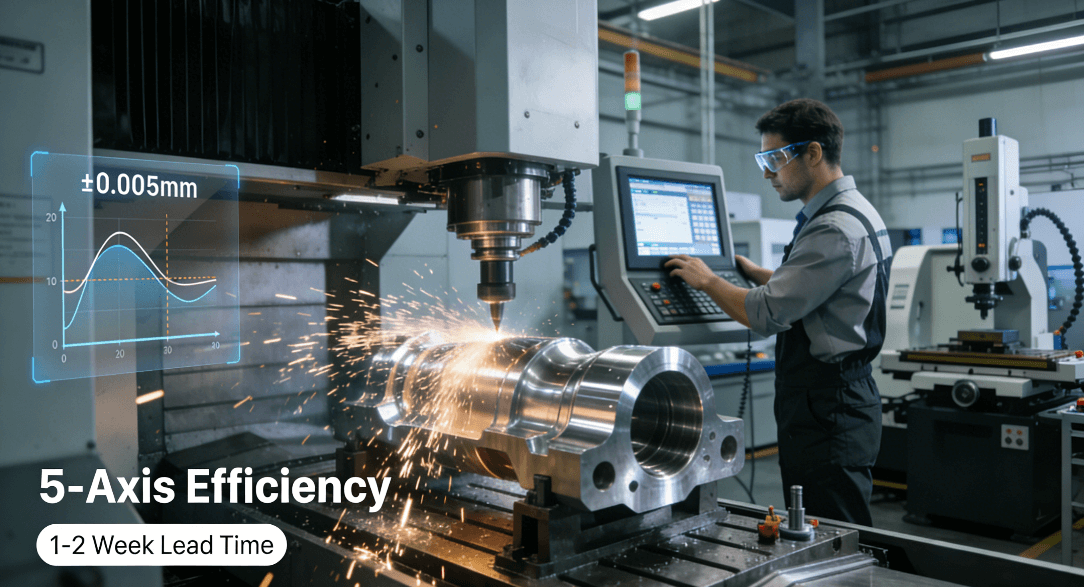
For instance, in the area of milling, the application of five-axis CNC milling machines involves the use of three linear axes and two rotation axes, which promotes the machining of the tool from various angles, thus appropriate for machining complex surfaces such as aircraft blades. Likewise, the use of the 3+2 machining involves the fixing of the parts at various angles, which is required for multifaceted parts, specifically in the automobile sector. These modern machines exhibit the ability to perform single setup machining, thus reducing the machining time by up to 30% compared to the usage of the 3-axis machining technique, shown in the machining of turbine blades. They are capable of achieving tolerance of ±0.005mm.
CNC milling turning centers involve the integration of the milling and turning processes into one machine. They contain tool-changing mechanisms that promote multi-operation processes such as the production of shaft parts. Application in the aerospace industry ensures consistency in the use of automated processes that eliminates human error, thus compliance with the ISO 9001 standard of quality management. Engineers requiring multiple processes in the project should use this technology.
As for the application area involving CNC machining, it is necessary for it to meet certain requirements in the industries it is used in, specifically so that the functionality is achieved.
In the aerospace industry, CNC milling is used to machine the production of lightweight and strong aircraft landing gear and engine blades. For instance, the use of 5-axis machining can result in the reduction of part weight by up to 20%, while the use of milling is also used to machine the production of strong transmission items in the car sector.In the industries mentioned above, the use of milling helps to create strong materials that can withstand stress. Complying with standards like AS9100D provides traceability and safety, and this use is focused on testing to provide the necessary standards.
Medical devices, implants, and operating instruments embrace the use of biocompatible material such as titanium with a tolerance of ±.001mm. The CNC Milling of Medical Devices is set by guidelines developed by the standard ISO 13485, which describes the use of quality Management Systems for Medical Devices. Medical devices that use CNC Milling include Custom Implants for orthopedic devices performed by 5-axis machining.
In the area of consumer electronics, the use of the CNC mill delivers detailed designs in the production of the electronics casing and connectors, which are preferably done using aluminum and thereby improves the savings, depending on the type of milling that suits the properties of the material, for example, the use of vertical milling when machining aluminum. Engineers, based on the needs, are able to identify the machining procedures suitable for the criteria.
The cost analysis in CNC Milling is a complex process that takes into account many variables; this understanding helps in effective cost management by the designer. The cost analysis technique helps in preventing the designer from going beyond their budget limit while allocating resources.
The purpose of precision CNC millers is to provide precise dimensions. The precise dimension is essential in meeting the requirements of the industry. The higher the precision of the dimensions, the better the adherence to the standards.
Tight tolerances, such as ± 0.001mm for medical devices, are necessary for the effective functioning and functional fit of components. Moreover, Geometric Dimensioning and Tolerancing, otherwise known as ASME Y14.5, plays a crucial part in specifying tolerances to prevent any possible misunderstanding. Actually, the application of CMM machines to carry out in-process inspections could be beneficial to provide accurate components, which are imperative within the aerospace industry because even slight deviations may lead to the failure of the component.
The surface finish relates to the longevity and usability of components. This is followed by polishing and/or coating processes, offering the components resistance to corrosion and friction. One car maker demands a smooth surface finish on their engines. The accurate milling process results in surface roughness values of below 0.4 microns, requiring sophisticated equipment. Hence, monitoring and control processes in production guarantee components meet specifications, a requirement for meeting the standard AS9100D specifications.
ISO 9001 and AS9100D certifications, for instance, ensure the implementation of quality controls such as audits and traceability that are supported by precision milling. Improvements, needing data analysis for milling, ensure the reduction of defects. Exemplars indicate satisfaction with the suppliers, who are certified, to be high, with the importance of precision cited for risk reduction.
To ensure the success of the project, selecting the right supplier is important, and for this, the engineer needs to assess the suppliers on the principles of objective criteria.
It is crucial to get a precise quotation in order to plan the budget. A proper procedure helps avoid complications.
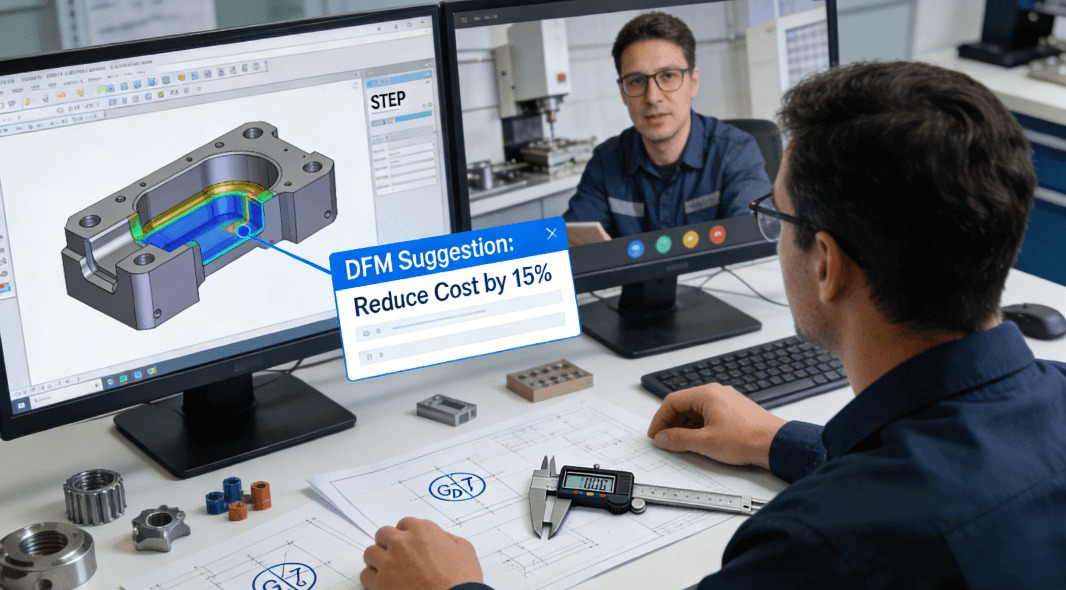
The CAD files should be submitted in formats that include STEP, STL, and others, capable of preserving the geometric information necessary for proper evaluation. It should also include the entire set of requirements, including the material and the tolerances, to prevent misunderstandings or misinterpretations. The process is made easier by the aid of online upload facilities, as provided by most vendors, and it also offers instant feedback about the possibility or feasibility.
Select materials and production processes according to project requirements, for example, using aluminum for prototypes to cut expenses, and requesting surface treatment only when necessary.Discuss possible solutions with the supplier in order to tap into their knowledge about economical solutions, such as discounts for batch production.
Review the manufacturability feedback from the supplier regarding design for manufacturability (DFM) to determine if any changes are recommended to optimize costs or machinability. The information should all be reviewed before moving forward to verify that all information is accurate.
This resource examines CNC milling type evaluation, usage, and cost considerations in a structured manner, focusing on data-informed best practices while adhering to standards. As a result, the knowledge gained from this resource can enable a manufacturer to avoid problems, reduce costs, and deliver successful projects.For more detailed guidance on type selection, please refer to this article on custom CNC milling services.
Q: What is the average lead time for custom CNC milling orders?
A: Lead times depend on the complexity, but for regular projects, the turnaround time would be within 1-2 weeks. Depending on the material required and surface finishes, this may go up. For urgent requirements, rapid prototyping facilities can bring down the turnaround time to 3-5 days.
Q: Can a CNC mill perform more than one task?
A: Material selection is directly related to cost and includes cost advantages for aluminum in prototyping and higher costs for titanium due to machinability. Performance versus cost considerations are essential for engineers, and DFM techniques can be used to overcome material limitations and optimize results.
Q: What are the advantages of 5-axis CNC milling over 3-axis?
A: 5-axis milling enables complicated components with enhanced accuracy. They save up to 30% of the time taken in producing aerospace components. However, the machinery is more expensive.
Q: How do I ensure the quality of CNC milled parts?
A: Implement quality assurance by inspecting in process with CMMs and by adhering to standards such as ISO9001. Indicate specifications for GD&T tolerances in design documents and select certified suppliers.
Q: What are the preferred file types for CNC milling quotes?
A: The STEP, STL, or IGES format can be used to retain geometric information. Do not use PDF for 3D files, as you would for 2D designs, but instead use online facilities to enable an instant quote.
The writer is part of the precision manufacturing expertise team for LS Manufacturing, where the firm focuses on aiding engineers with part challenges for the aerospace, medical, and automotive sectors. The firm, with certifications such as ISO 9001 and AS9100D, ensures quality production using technology and advanced processes. To get more information or a free project review, contact them for the idea implementation process.