The modern educational environment has evolved into a high-pressure ecosystem. It is no longer just about grades and lesson plans; it is about navigating a complex web of social anxiety, performance pressure, and administrative burnout. For both the student trying to keep their head above water and the teacher trying to support thirty students while managing their own well-being, the school day often feels like an endurance test.
As we move deeper into a digital-first era, the conversation is shifting from simply "reacting" to crises to proactively managing the chronic, low-level stress that permeates the classroom.
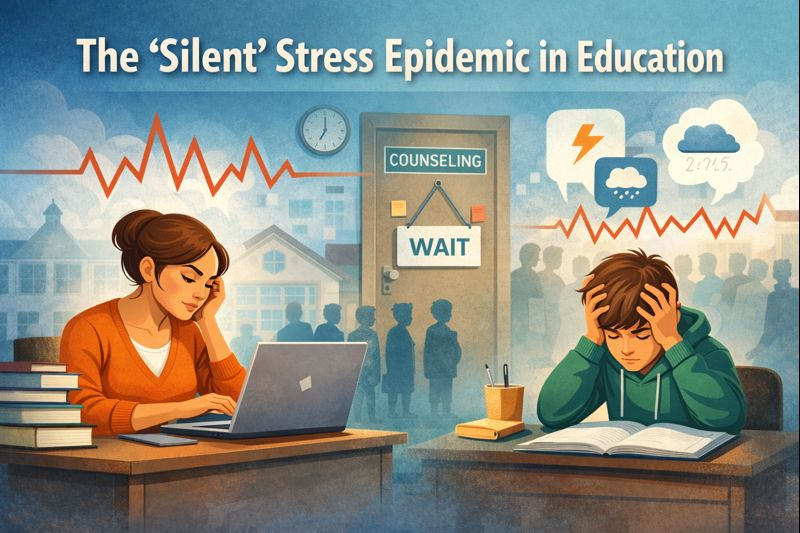
The stress facing our educational institutions is not hypothetical; it is quantifiable and pervasive. The demand for support is outpacing the traditional capacity of school counseling centers. According to a report by the American Psychological Association (APA), the demand for campus mental health services has continued to rise, with students presenting increasingly complex concerns. The report highlights that university counseling centers are reimagining care models to move beyond the traditional "therapy hour," realizing that a waiting list is of no use to a student who is struggling today.
Teachers are equally vulnerable. The emotional labor required to manage a classroom, often serving as educator, mentor, and mediator simultaneously, leads to rapid burnout. While schools have begun implementing wellness initiatives, such as mindfulness training, these measures must be part of a larger support structure. As noted in a recent discussion on mindfulness for teachers and students, while mindfulness practices can significantly reduce anxiety and improve focus, they are most effective when paired with accessible, consistent mental health resources. Breathing exercises are a powerful tool, but they cannot be the only tool when a student or teacher feels overwhelmed by the daily grind.
This is where the model of support must evolve. The barrier to entry for traditional counseling, scheduling an appointment, walking into an office, and sitting face-to-face with a stranger, is often too high for someone dealing with "everyday" stress. A student worried about an exam or a teacher frustrated by a difficult parent meeting doesn't necessarily need a clinical diagnosis; they need a safe space to vent and process immediately.
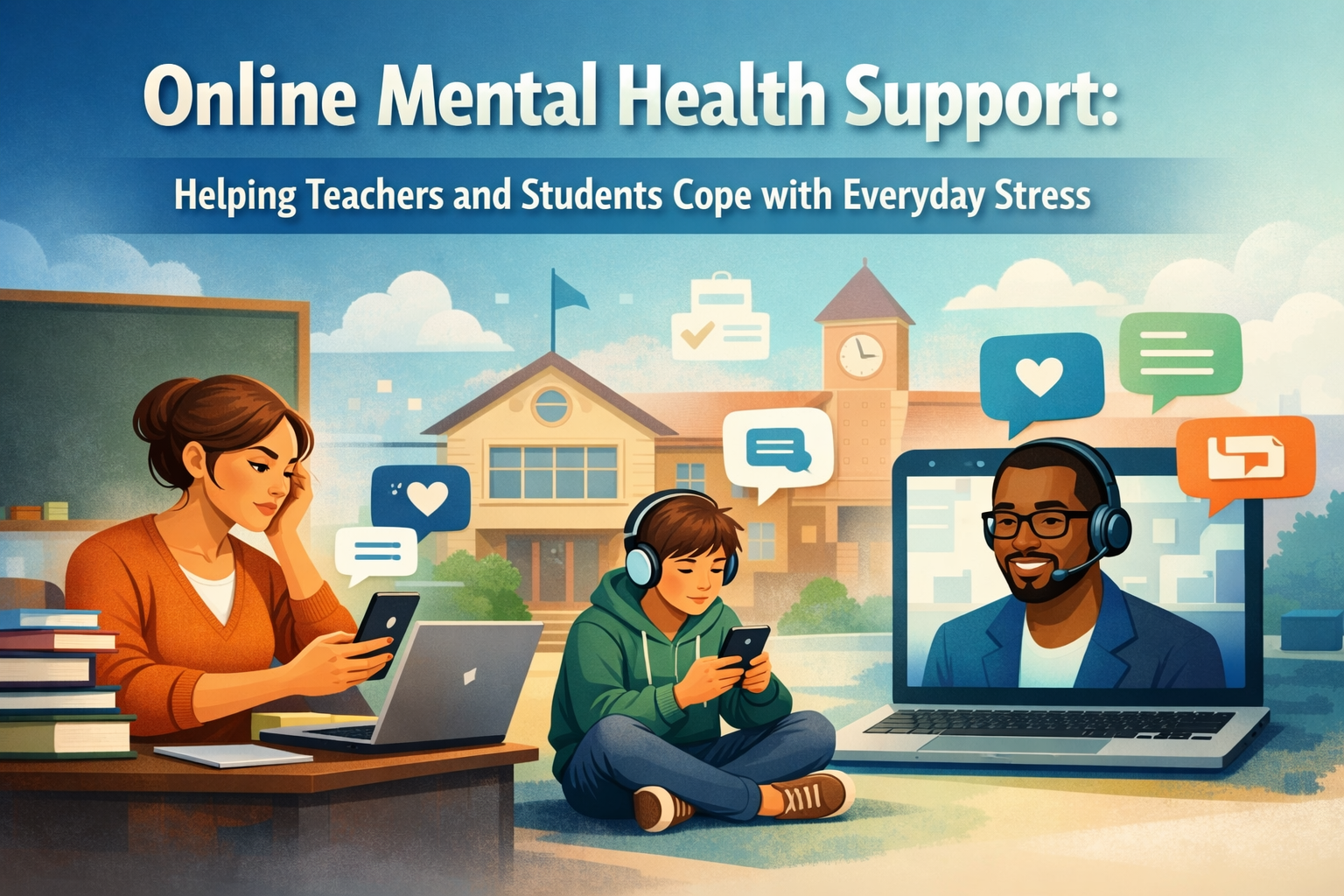
The fundamental barrier to accessing mental health support has long been two-fold: logistical difficulty and social stigma. This is the precise gap that online mental health platforms are expertly designed to fill. By removing the logistical friction associated with finding a physical office, such as travel time, scheduling conflicts during business hours, and geographical limitations, online platforms instantly democratize access to essential emotional and psychological support.
For organizations evaluating how to support people beyond office hours or formal settings, exploring established online mental health platforms such as Counslr may be a practical starting point when assessing scalable, discreet support options.
Furthermore, these virtual spaces effectively neutralize the social anxiety of "being seen" going to a counselor's office. For many individuals, especially those in tight-knit communities, professional settings, or even within their own families, the act of seeking therapy carries a heavy perceived stigma of "weakness" or "failure." Online platforms offer a layer of profound discretion and anonymity, transforming a public undertaking into a private, secure one.
The resulting accessibility is transformative for various demographics. For a shy teenager grappling with the intense pressures of adolescence, or a busy professional who travels frequently or works non-standard hours, the ability to text, call, or video chat with a qualified support specialist is a critical lifeline. It allows them to address stress, anxiety, or emotional distress the very moment it arises. This immediacy is key; it ensures that nascent issues are tackled proactively, rather than being ignored, allowed to fester, and ultimately compound into a debilitating crisis that requires intensive, and often expensive, intervention. These platforms thus shift the paradigm from reactive crisis management to preventative, on-demand emotional maintenance.
The integration of digital mental health tools into schools is not about replacing school counselors; it is about extending their reach. These tools act as a "force multiplier," handling the volume of daily stressors so that in-person counselors can focus on students with acute needs.
For school administrators, investing in these technologies sends a powerful message: we care about your well-being on Tuesday afternoon, not just during Mental Health Awareness Month. By normalizing the use of digital tools for coping, schools can create a culture where seeking help for stress is as normal as seeking help for a math problem.
In an environment where students and educators are expected to be constantly engaged, responsive, and resilient, access to timely support is no longer a luxury — it is a necessity. Everyday stress does not announce itself as a crisis, but when left unaddressed, it quietly erodes focus, motivation, and emotional well-being across an entire campus.
By incorporating accessible, digital support options alongside traditional resources, schools can better reflect how people actually experience stress today, intermittently, unpredictably, and often outside standard office hours. The goal is not to medicalize normal emotions, but to acknowledge them early and offer a constructive outlet before they escalate.
When schools invest in systems that support both prevention and early intervention, they create healthier learning environments for everyone involved. Students feel more supported, educators feel less isolated, and institutions are better equipped to sustain long-term well-being rather than continually reacting to burnout after it occurs.
The future of campus wellness lies in meeting people where they are, in the moments that matter most and ensuring that help is available not just in emergencies, but in everyday life.