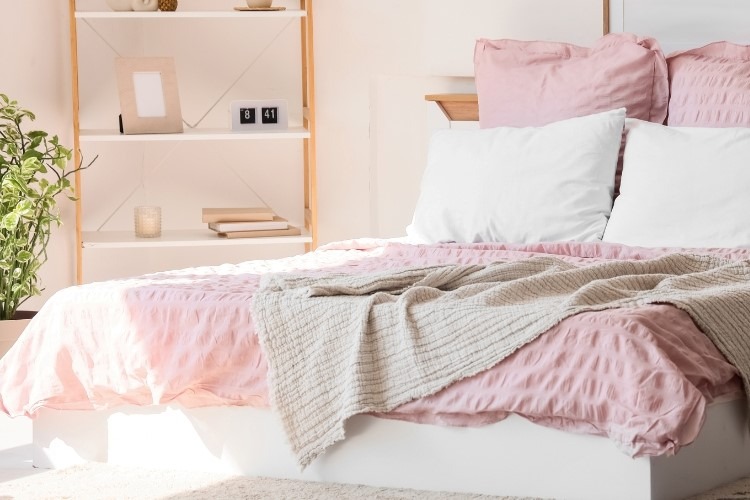
Moving into your first rental can feel like navigating a minefield of restrictions. You want to create a space that feels like home, but those lease terms about "no alterations" and the looming threat of losing your security deposit can make even hanging a picture frame feel risky. The good news? You can absolutely transform your rental bedroom into a stylish, personal sanctuary without jeopardizing your deposit or breaking your lease agreement.
Whether you’re still looking for the perfect room or you’re already settled, these renter-friendly design strategies will help you create a bedroom you'll love coming home to, all while keeping your landlord happy.
Your rental likely came with builder-grade white or beige walls, and while painting might be off-limits, you can still inject personality through removable color. Designer Darrell Gardner recommends light, soft colors on walls and large surfaces. Keep darker tones only for small accents so the walls seem to recede and the room feels more open.
Peel-and-stick wallpaper has revolutionized rental decorating, offering endless patterns and hues that apply easily and remove cleanly. Focus on creating an accent wall behind your bed to make a bold statement without overwhelming the space.
If wallpaper feels too permanent, consider using large-scale artwork, tapestries, or fabric panels to introduce color and pattern. A vibrant duvet cover, colorful throw pillows, and a rug can completely transform the room's atmosphere without touching a single wall. Choose a cohesive color scheme with two to three main colors and use them consistently throughout your textiles and accessories for a polished, designer look.
Some places may actually let you paint! Use platforms like spareroom.com to find rooms for rent in Los Angeles, Boston, Las Vegas, or anywhere else in the US, and discover landlords and homeowners who may give you more rein.
One of the biggest challenges in rental decorating is figuring out how to hang things without creating holes. Command strips and hooks have become the renter's best friend, supporting everything from lightweight frames to floating shelves when used correctly. Always follow the weight limits and application instructions carefully, as improper use can damage paint or drywall.
For heavier items like mirrors or shelving, consider leaning them against the wall instead of mounting them. Designer Kelly Wearstler suggests using mirrors generously to create depth and bounce light; she recommends multiple mirrors on a wall or even a mirrored headboard in a bedroom to visually expand the space.
Picture ledges that lean rather than mount can display artwork, plants, and personal photos while remaining completely damage-free. When you do need to use nails for hanging, keep a small container of spackle and touch-up paint (matched to your wall color) on hand for easy repairs before moving out.
When furnishing your first rental bedroom, think strategically about pieces that will move with you. Go for freestanding furniture that's versatile and timeless. A bed frame, a dresser with lots of storage, and a comfortable reading chair will serve you through multiple moves.
Look for furniture with multiple functions to maximize your space. A storage ottoman provides seating while hiding extra blankets or out-of-season clothes. A nightstand with drawers keeps essentials organized and surfaces clear. If your rental bedroom lacks a closet or doesn’t have a lot of storage, a freestanding clothing rack can actually become a design feature when styled with your best pieces on display.
Try not to buy furniture in trendy colors or very specific styles that might not work in your next space. Instead, choose neutral, classic pieces that you can personalize with cushions, blankets, or other accessories.
Rental bedrooms often come with unflattering overhead lighting that can make even the most thoughtfully decorated space feel harsh and uninviting. The solution is layering your lighting with portable options that create warmth and ambiance.
Floor lamps, table lamps, and string lights don't need any installation and can dramatically change your room's mood. Place a reading lamp beside your bed, add a floor lamp in a dark corner, and consider battery-operated LED strips behind your headboard or along shelving for a soft glow. Smart bulbs are another renter-friendly option, allowing you to adjust color temperature and brightness to suit different activities and times of day, all controlled from your phone.
Don't underestimate the power of candles (if your lease allows them) or flameless alternatives. They introduce atmospheric lighting that makes any space feel more intimate and intentional.
When floor space is limited, look up. According to Home and Gardens, designers like Carolyn Cerminara and others suggest tall bookcases, higher‑hung artwork, and tall headboards to draw the eye upward and create a sense of height in a small room.
Over-the-door organizers and hooks maximize often-wasted space while remaining completely removable.
Freestanding ladder shelves lean against walls and provide display and storage space without mounting. These work beautifully for books, plants, decorative objects, and even folded clothes. Similarly, a standing coat rack can hold bags, hats, and jewelry, keeping these items organized while looking good.
If your rental bedroom has particularly high ceilings, hanging plants from command hooks or tension-rod systems can draw the eye upward and make the space feel more dynamic. Choose low-maintenance plants like pothos or snake plants that thrive in various light conditions and forgive occasional neglect.
The fastest way to make a rental bedroom feel like yours is through layers of textiles. Beyond your bedding, consider adding curtains that complement your color scheme. Curtains can hide unsightly window treatments, improve privacy, and add softness to hard-edged rental spaces. Use tension rods or command hooks to hang them without drilling.
Area rugs define your space, add warmth underfoot, and can cover less-than-perfect rental flooring. Choose a size that extends beyond your bed on all sides for a luxurious feel, or use smaller rugs to define different zones within your bedroom.
Personal touches like throw blankets, decorative pillows, artwork that resonates with you, and meaningful objects displayed thoughtfully make the difference between a room that looks styled and one that feels lived-in and loved.
Before you start decorating, photograph your rental bedroom from every angle. Document any existing damage, and save these photos along with your lease agreement. When you do make changes, photograph each step, especially if you're doing anything even remotely questionable. This documentation protects you during move-out and provides proof of the room's original condition.
Designing your first rental bedroom is an exercise in creativity within constraints. Rather than viewing rental restrictions as limitations, see them as opportunities to develop a decorating style that's flexible, portable, and truly your own. With these renter-friendly strategies, you'll create a beautiful retreat that reflects your personality while keeping your security deposit firmly in your pocket.
● Duque, F. (2025). Kelly Wearstler’s 7 Tips For Making the Most of Small Spaces. Duke Renders.
● Warwick, S. (2023). 10 things designers do to make rooms look bigger – strategies for success from the experts. Home & Gardens.