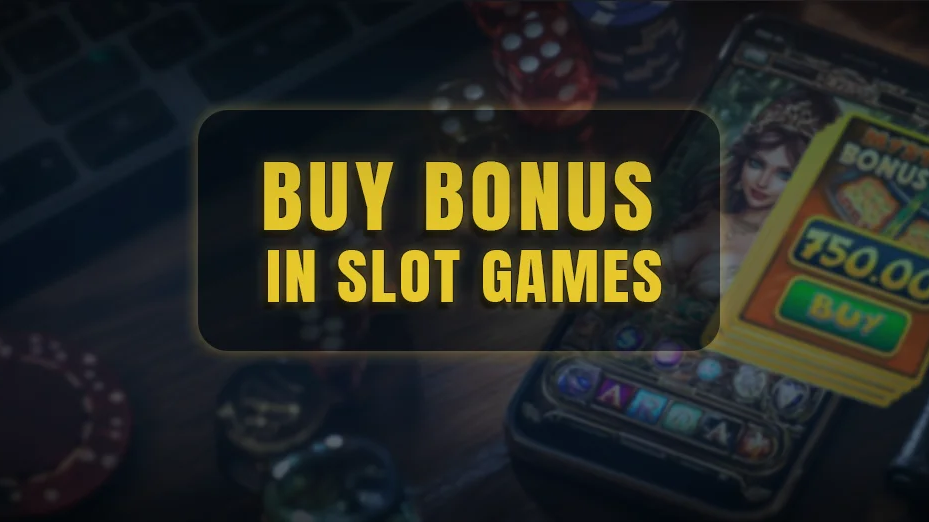
Slot machines have always been about chasing that big moment – the bonus round where things can really explode. In the past, players had no choice but to spin and wait, sometimes for hundreds of spins. Today, many games offer a shortcut: the “Buy a Bonus” feature. Instead of waiting, players can pay a fixed price and jump straight into the bonus. This option started mostly online, but now it’s showing up more and more on casino floors across the world. While some players love it, others remain cautious. Here’s a simple, clear look at what buying a bonus really means, written from an outside perspective.
The name says it all. Normally, bonus rounds trigger naturally after a certain number of spins or when specific symbols land. That can take a long time – sometimes 150, 200, or even 500 spins, depending on the game. With the Buy a Bonus option, players skip the wait entirely. They pay a set amount (usually shown clearly on the screen), and the game instantly starts the bonus round or free-spin feature. If someone wants to try bonus gameplay without spending their own funds first, they can also check offers like https://casinosanalyzer.ca/free-spins-no-deposit/75-dollars to test the excitement risk-free.
These purchasable bonuses are almost always the most exciting and potentially rewarding parts of the game. Game makers don’t let players buy cheap, low-paying features. Instead, the buy option is attached to high-value bonuses – the ones with giant symbols, multipliers, expanding wilds, or huge jackpot possibilities. In short, players pay to go directly to the part everyone is hoping for.
A few years ago, buying a bonus was rare in land-based casinos. Only a handful of machines offered it, and many casinos turned the feature off even when the game supported it. Things have changed quickly. The huge popularity of online casinos – where bonus buys have been standard for years – pushed physical casinos to follow. Now, major manufacturers like Aristocrat, Light & Wonder, and IGT release new land-based games with the buy option enabled in many locations.
Still, it’s not everywhere. Some gaming jurisdictions ban or restrict the feature, and certain casino operators prefer to keep it disabled because they believe it changes the traditional slot experience. Where it is available, players usually see a big “Buy” button right on the main screen.
Players who use the feature regularly point to several clear benefits.
For many people, the ability to cut straight to the good part feels like the future of slot play.
Nothing comes without trade-offs, and bonus buys have some significant drawbacks.
The biggest issue is usually the cost. Prices typically range from 50x to 150x the current bet size, and sometimes even higher for ultra-volatile games. That means:
Betting $1 per spin? A bonus might cost $50–$150. Betting $5 per spin? The same bonus suddenly costs $250–$750 or more.
Many buyable bonuses are attached to very high-variance games. It’s common to spend $100 on a bonus and walk away with $20 or less. On the flip side, the same bonus can pay thousands, but there are no guarantees.
Online, players can often spin for 20 cents, so a 100x bonus costs just $20. In a physical casino, minimum bets are higher (often 75 cents to $2 or more), pushing the buy price much higher for the exact same mathematical bonus.
Sometimes the bonus triggers naturally after just a few spins. Players who buy it right before a natural trigger end up paying extra for something they were about to get for free.
Because the cost is upfront and large, it’s easy to burn through a bankroll very quickly if several buys go bad in a row.
Casinos on the floor face different economics than online sites. Physical machines have higher minimum bets to cover the cost of the cabinet, electricity, floor space, and staff. That forces the bet levels up, and since bonus buy prices are tied directly to the bet size, the dollar amount feels much heavier.
Online operators can offer 20-cent spins because their overhead is tiny by comparison. Many players wish land-based casinos could find a middle ground – perhaps a separate “low-stake” version of the same bonus buy that keeps the math identical but scales the price down for smaller bettors.
The feature isn’t for everyone, but certain types of players get the most value from it:
On the other hand, cautious players, those on tight budgets, or anyone who enjoys the full journey of a slot session usually prefer to spin naturally.
The Buy a Bonus feature is one of the biggest changes in slot design in the last decade. It gives players control and immediate gratification – two things traditional slots never offered. When it works, it feels fantastic: one click, big music, lights, and a screen full of potential. When it doesn’t, the sting is real because the money leaves the balance all at once.
Casinos and manufacturers are still figuring out the sweet spot – especially for land-based venues. Lower minimum bets or scaled-down buy prices could make the feature accessible to more people without changing the underlying math. Until then, buying a bonus remains a high-risk, high-reward choice.
In the end, it comes down to personal preference and bankroll management. For players who understand the cost and volatility, the option to skip straight to the fireworks is hard to resist. For others, the old-fashioned thrill of waiting for scatters to line up still holds plenty of magic. Either way, the choice now exists, and it’s reshaping how millions of people play slots every day.