Over 100 million people play Minecraft worldwide. Ten thousand copies are sold every day. Nothing like it has been seen since Tetris and Super Mario. But Minecraft is more than just a game: it's shaping the minds of a generation. We'll tell you how.
Do your kids spend hours playing Minecraft APK or watching other kids playing it on YouTube? It's very likely. This retro-looking video game with its somewhat basic graphics, created by a Swedish geek, has become a mass phenomenon. It's also very likely that you don't understand what kids find so appealing about this blocky digital entertainment.
Why is it so addictive? And if you've tried to play a game, you'll struggle to grasp the very essence of it. What's the game about? Where on earth are the instructions? Confused? Welcome to the club. Minecraft 's success has surprised sociologists and educators. But the most interesting thing is that Minecraft is shaping the minds of a generation. Because kids are unknowingly learning the skills necessary to survive in the shrinking job market. Which doesn't mean the game doesn't have a 'dark side,' as psychologists warn. Minecraft is on the list of the five most addictive video games, an addiction that intensifies in multiplayer mode, which allows thousands of users to play online. That's why it's advisable that, in the case of minors, there be control over the time they spend playing, without ignoring its contribution to the digital world they live in.
You, who grew up in an analog world, learned the basics of commerce by trading cards, and the ups and downs of capitalism by winning and losing at marbles. Today, the skills demanded by the 21st-century economy are creativity, innovation, and collaboration. And Minecraft fosters the exchange of techniques and knowledge. Digital natives learn while they play because Minecraft rewards them for sharing information, combining resources, and solving design problems like engineers.
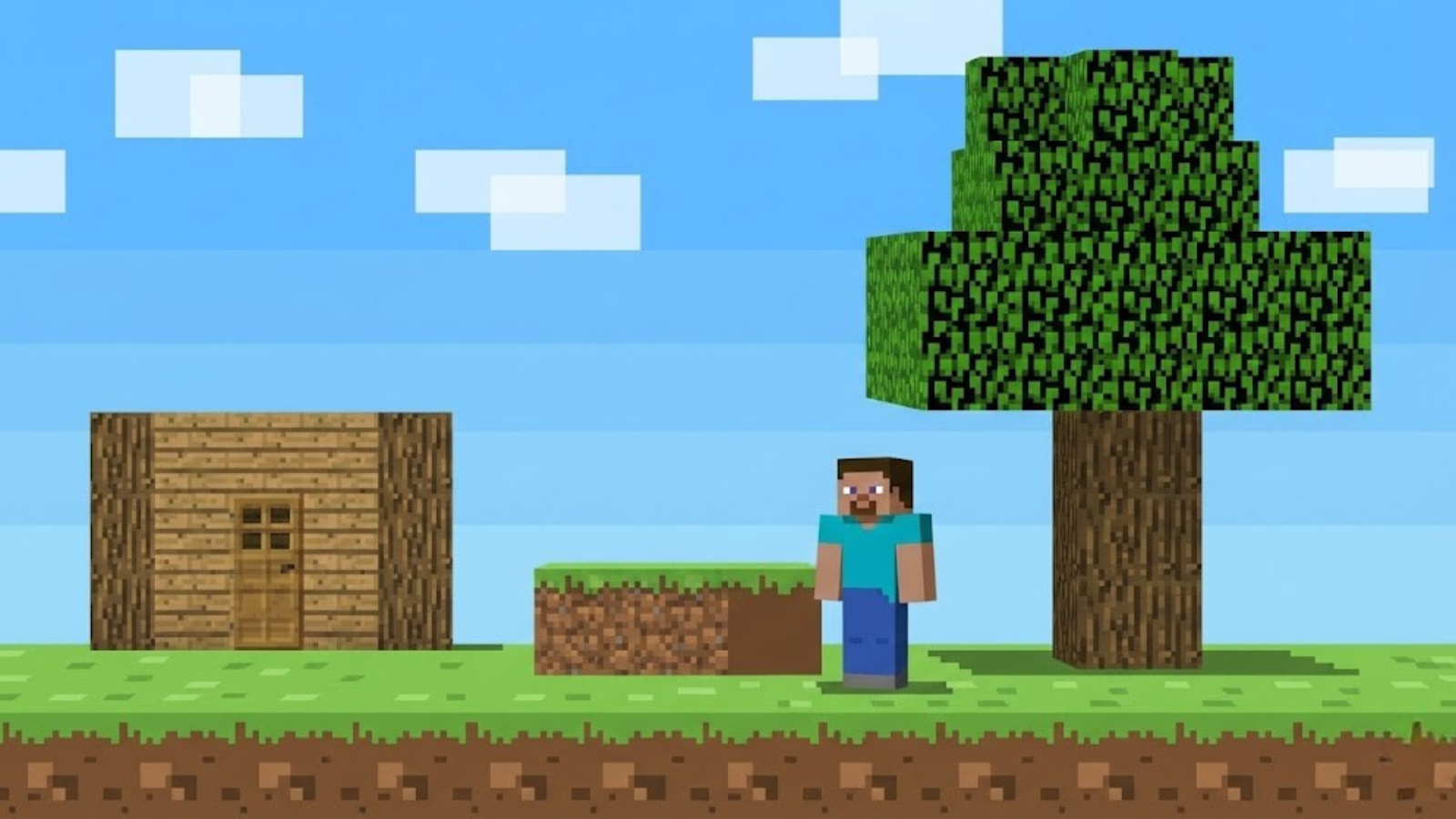
Minecraft is a sandbox or open-world game focused on building with three-dimensional blocks. But the player can do whatever they want in this digital world created by an algorithm, where everything is random. There are many game modes, but the three basic ones are: Creative, in which you have unlimited resources, somewhat like opening a box with an infinite number of Lego pieces; Survival, in which day and night follow one another in twenty-minute intervals: during the day you explore the terrain; at night it's best to stay safe; and Adventure, where the player faces maps and challenges designed by other users.
At first glance, it seems simple, but it can be incredibly complex. And for newcomers, it's inscrutable. This is because its creator, Markus "Notch " Persson, worked with a very low budget, so he didn't design tutorials or help menus. New players have to learn on their own. And if they want to survive the first night, they'll have to consult a wiki, a forum, a chat room… and hope a kind soul can explain how to craft an axe, gather wood, and build a shelter. Otherwise, they'll perish at the hands of hostile creatures. Humanity learned to fend for itself, more or less, in this way.
There are no winners or losers. It's played for the sake of playing, without rewards, without a clear objective. So the game has no end either. For most, the most rewarding thing is showing videos of their designs and gameplay to others. Minecraft APK Download is the second most popular search on YouTube. Why does it captivate children? Because it's a building game. But it's not exclusively a children's game. In fact, the first players were nerds; the average user is 28 years old. It has something of a Tibetan mandala about it: those sand puzzles that Buddhist monks build grain by grain.
It's the user community that has turned Minecraft into a global phenomenon. The unleashed creativity of millions of players. Persson made it possible to share games, package each world into a map, and export it. Freely and legally. There isn't a central server; there are thousands scattered around the world. For example, it was a user who 'invented' a material that is now essential in Minecraft: redstone, a type of mineral that has the properties of an electronic circuit. To do things with it, a certain level of computational thinking is necessary.
The UK is already using Minecraft to find cybersecurity talent to work for the government. And the New York Times is talking about a 'Minecraft generation' that is learning to interact with technology differently. A generation that is capable of manipulating computers, hacking them, and programming them. In short, a generation that will eventually understand machines. Children are becoming familiar with code. And they will learn it as if it were a language as essential as English.
“Today, Minecraft ’s educational possibilities are immense. One teacher has designed a Viking world to teach the history of exploration. Another, a decimal island, where players have to solve math problems to get food,” explains Michael Dezuanni, a professor at Queensland University of Technology. “Players have thousands of online resources designed by other players at their disposal. If they want to delve deeper, they have to research, propose solutions, accept suggestions, and comment on the work of others.” It’s not unlike peer review in science. But this interaction with other players also has its dark side when it comes to children. Children interact with unknown users without supervision, a relationship that can extend to their social networks. And then there’s the phenomenon of griefers , cyberbullies who humiliate other players and destroy their creations, which can cause great distress to the children they harass.
Microsoft hasn't stopped at just buying Minecraft. It has also acquired an expansion or mod designed by a group of teachers and computer programmers that adapts the game for teaching in schools. It's called MinecraftEdu and is already in use in more than 7,000 classrooms across 40 countries. It operates on a subscription basis, costing around $5 per student annually.
While Minecraft emphasizes creativity, problem-solving, and collaboration, other popular games like Nulls Brawl also engage students, showing how games in general can capture attention and motivate learning—though they are less structured for formal education.
Mimi Ito, an anthropologist at the University of California, points out a real-life lesson from Minecraft. “Minecraft gets broken a lot, and you have to fix it. Children learn that things that break need to be repaired. In the Apple ecosystem, you wait for the company to take care of everything and for things to work again with the next update; in the Minecraft ecosystem, you're the one who has to roll up your sleeves if you want what you've created to work again.”
Minecraft wouldn't be what it is without YouTubers, players who share their gameplay, builds, designs, and video tutorials. There are over 70 million Minecraft videos on YouTube. Some players even make a living from it… and a very good one at that. The most followed Spanish-speaking YouTubers can earn over €600,000 a year. Most are in their twenties, and almost all of them moved to Los Angeles as soon as they saw a long-term career path. They are pioneers in exploiting the generation gap between adults and their children, digital natives who have relegated television to the sidelines in favor of mobile phones and tablets.
Few people know them by their real names, but Vegetta777, WillyRex, Alexby, and Staxx are the most popular Spanish YouTubers (together they have 25 million subscribers). They don't just play Minecraft, and they're not exactly skilled; they're not hardcore gamers who make a living from competition, but they're entertaining when commentating on their gameplay and are good communicators. And that pays off. From €1 to €0.15 per thousand views. "Little by little, we've become more professional. Now brands are interested in advertising on our channels," explains Vegetta777, the alias of Samuel de Luque, who has over 1.1 billion views.
The majority of their audience is underage, so they're more careful about what they say now than when they started. "The key is that we have a lot of fun doing what we do, and it shows, and people have just as much fun," says Staxx. "Those who follow us end up knowing our lives. That makes us like a friend or an older brother," WillyRex points out. "Kids would show up at my door and ring the bell to see if they could come up and play a game with me," says Alexby.
Internationally, and with English as the primary language, the number of YouTubers is skyrocketing. Sky Does Minecraft, the most popular, started in 2011 and already has over eleven million subscribers. Behind the stage name is Adam Dahlberg, a 24-year-old American married to another YouTuber. His income is estimated to be between two and three million dollars annually.
Servers. These allow users to play online with other people. They can be hosted on a dedicated server or be temporary and run on a home computer. Users can comment on games and must abide by the rules of each community.