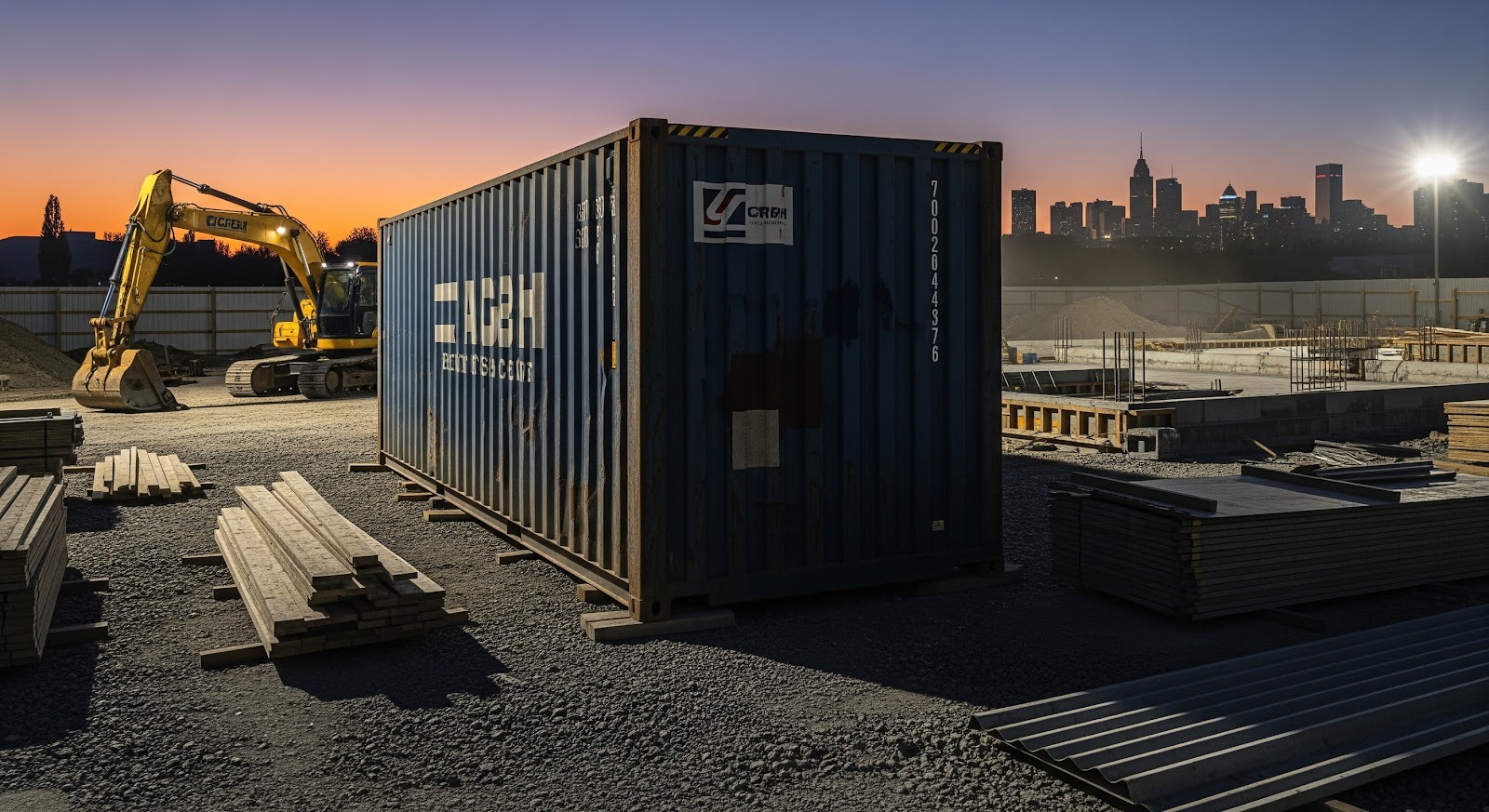
On fast-moving build schedules, storage isn’t just a convenience—it's a risk node. Delays usually trace back to four areas: spec fit, condition, delivery logistics, and modifications. This guide de-risks each area so your team protects budget, materials, and milestones.
Right-sizing prevents second orders and rework. For tool and materials storage, most firms choose 20’ for small urban sites and 40’ for higher-capacity yards. High Cube adds roughly a foot of interior height for palletized or bulky items. Quick checks before you issue a PO: confirmed exterior/interior dimensions, door clearance, swing radius, and turning room for delivery trucks. Documenting these checks upfront reduces change orders and site interference later.
Condition surprises lead to downtime and damaged materials. A one-trip unit typically arrives near-pristine; a used unit is commonly wind- and watertight and cost-effective for construction storage. Ask for photos of the actual unit, door function verification, and clarity on any surface corrosion. If your project needs predictable interior conditions (e.g., finishes, moisture-sensitive goods), the premium for cleaner floors and tighter seals often pays for itself via fewer losses and site calls.
Treat delivery as you would a crane pick:
Decide early if you’ll need roll-up doors, vents, lock boxes, windows, electrical, or double-end doors. Lead with a standard mod menu to avoid custom change orders mid-project. When planning power, separate circuits for lighting vs. receptacles, GFCI where applicable, and protected conduit runs. Early decisions also help with site layout (e.g., door orientation for forklift traffic and egress).
When procurement compares options, factor in total installed cost: unit grade, modifications, delivery fees, offload, and any ground prep. To explore options and current inventory, many teams review reputable suppliers offering shipping containers for sale that publish transparent specs and delivery details.
Even simple storage can complicate compliance. Keep doorways clear, secure stacked materials, and maintain stable foundations to prevent racking—principles consistent with OSHA jobsite storage guidance. For teams building with containers, consult industry resources on modular construction best practices to align with stakeholder expectations and inspection requirements.
When you treat container procurement like a small project—with specs, documented condition, delivery planning, and planned modifications—you protect the schedule and your reputation with clients. Aligning these steps upfront helps PMs and estimators control spend, avoid callbacks, and keep crews focused on production work.